

“Welcome to Solo in Canada: Musings From Mid-Life+ — a cozy corner of the internet for those of us navigating the second half of life with intention and curiosity. While I share these reflections from my perspective as a solo woman in her 2nd chapter, the journey of aging well, staying connected, and finding joy is one we all share—regardless of our relationship status.
Here, you’ll find honest conversations about reclaiming our time, nurturing our health, and growing into our truest selves. Whether you’re fiercely independent, newly solo, or simply a fellow Canadian traveller on the mid-life path, there is a seat at the table for you.
Grab a Timmie’s, settle in, and explore ideas that inspire, challenge, and celebrate the journey beyond 50. I’m so glad you’re here.”
Why Many People Feel Like Outsiders in Today’s Society
- Why Many People Feel Like Outsiders in Today’s Society

A few years ago, I was driving to work listening to a local morning radio show. The hosts were talking about the upcoming Super Bowl weekend. They joked about packed grocery stores, people preparing platters, parties being planned everywhere, and how “everybody” would be glued to the game.
The way they talked, it sounded as if the entire country would essentially stop functioning for 48 hours.
I remember thinking: Really? Everyone? I felt like such an outsider because not only had I not been invited to a Super Bowl party, I actually didn’t even know it was Super Bowl weekend. In fact, I think I’ve gone to fewer than 5 in my entire life. Worse, I didn’t even plan to watch the game.
I wondered just how it had happened that my life had diverged so far from what everyone else seemingly was enjoying and taking part in. It was an incredibly isolating feeling.
When I got to work, I casually asked the teachers in the staffroom if they had big Super Bowl plans. Nobody did. Not one person. I later learned that my own millennial children weren’t doing anything either. Neither were my friends!
And this has happened to me over and over again through the years. It still happens, all the time.
Around St. Patrick’s Day, it often feels like the whole country spends the weekend at pubs, wearing green hats and enjoying beer with friends. Or casual conversations with acquaintances frequently include questions like “So where are you going on your vacation this year?” There’s a mistaken belief that “everyone” takes annual vacations, when in fact, for many, that luxury is simply unaffordable. Media language often assumes that “everyone over 30” owns a home, that “everyone” has a surprise 50th birthday party thrown in their honour, and that “everyone” shares a loving partner.
But when I quietly look around my actual life, it rarely matches these sweeping descriptions of what “everybody” supposedly does or has.
And over time, I started wondering whether the problem wasn’t my life at all, but the stories we constantly tell about what is “normal.”
The Difference Between Reality and The Narrative
When enough people confidently repeat the same cultural script, eventually, the script starts sounding like objective truth. And then, unfortunately, the younger generations of today believe that our lives were actually really like the myths that have been perpetuated in our movies and TV series, novels, and our own stories. Even looking back at historical newsprint or magazines won’t tell the story that we were socialized NOT to tell.
We hear phrases like:
“Families used to be closer.”
“Marriages of the past were often marked by enduring happiness and a profound, lifelong love.”
“Nobody wants children anymore.”
“People are selfish now.”
“Women have changed.”
“Adult children no longer care about their parents.”
The implication is often the same: there was once a stable, emotionally healthy, morally grounded society that every person subscribed to, and now suddenly everything has unravelled.
While I recognize that society has changed—that is undeniable—I can’t help but wonder how much of this shift is simply the removal of filters and censors rather than a fundamental change in what people value and believe.
When I look back honestly at my younger years and the lives of those around me, I don’t remember some universal golden age of emotional stability and close family connection.
Some families truly were loving, stable, and deeply connected. Some still are. But I suspect the cultural image of universal family harmony was always far more selective than we admitted.
I remember women trapped in unhappy marriages because, financially, they had few realistic alternatives. There were latch key kids because both parents needed to work to pay the bills, and the family neighbourhood might not have been as congenial as it’s portrayed now. In fact, the neighbourhood I live in now is way more friendly and cooperative than the one I grew up in, in the 60’s and 70’s.
I remember lots of neighbours who barely spoke to one another despite living side by side for years. I grew up in a big city. Everybody didn’t know everybody else, despite what the movies tell you. I did live in the suburbs, on a quiet street lined with semi-detached houses. But there were no block parties. Not one. Ever. Terrible crimes occurred occasionally, and we most definitely locked our doors at night.
And I remember many adults quietly enduring lives they seemed deeply unhappy in because they believed they had no right to want anything different.
None of this was unusual.
What was unusual was openly discussing it. And so we all just went along, pretending that everybody’s lives mimicked what we read, watched and heard about, because well…we just did.
Maybe People Aren’t More Miserable — Maybe They’re More Honest
Recently I heard a commentator discussing a survey claiming that one in three young adults say they don’t plan to have children.
The reaction was dramatic. According to the discussion, this was evidence that society had become bleak, unstable, and hopeless.
But my first thought was: look at the ages of the people being surveyed.
Because when I was in my early twenties, I wasn’t sure I wanted children either. No, that desire didn’t hit me until I was in my later 20s. And now, having raised 3 beautiful kids I’m glad I chose a family. But before the age of 27, I wasn’t thinking about white picket fences and school plays.
In my early 20s, I couldn’t imagine how anybody could ever afford a house. I couldn’t picture myself as a parent. I wanted a career. And believe it or not, the cost of daycare, even in those days, made all my friends pause.
In my early adult years, I felt uncertain about almost everything for the future. I had dreams of a career, slo-travel around the world, and other adventures.
That wasn’t because civilization was collapsing.
If online surveys had existed in the 1980s the way they do now, my answers at that age may also have sounded bleak and uncertain in the family realm.
And beyond that, I suspect there have always been many people who genuinely did not want children, but never felt socially permitted to admit it and would not have been honest if given that same survey.
Particularly for women.
For generations, many women were raised with the assumption that motherhood was not merely one possible path but an expected duty. Marriage and children were often treated less as choices and more as inevitabilities.
It can be difficult to know what you truly feel when one version of life is presented as normal, and all others quietly imply failure or selfishness (which has always been a bizarre suggestion to me, but let’s not go down that rabbit hole).
I sometimes wonder how many people in earlier generations lived lives they never authentically chose — and how many young people today still feel that quiet pressure, even now, to want things they aren’t sure they want.
Maybe Women Haven’t Changed As Much As We Think
One narrative I hear constantly is that modern women have somehow become anti-marriage or anti-men.
Statistics are discussed showing that many single women are not interested in partnering up or finding another after divorce or widowhood. Commentators often frame this as evidence that women today have fundamentally changed their attitudes.
But have they?
Or do women now simply have more freedom to choose lives that some may always have preferred?
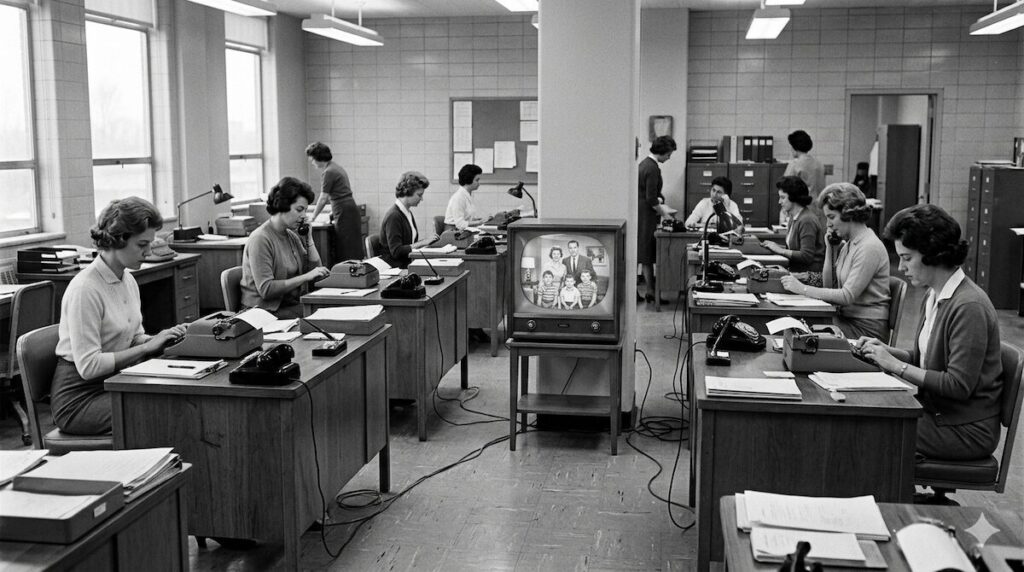
According to the OECD, declining fertility rates across developed countries are linked partly to women’s increased educational attainment, economic independence, birth control and social empowerment.
In other words, as women gained more freedom and more choices, many also chose to have fewer children — or delayed having them altogether. That doesn’t necessarily mean modern women suddenly became less nurturing or society became morally broken. It may simply mean women became more able to shape their lives according to their own preferences rather than cultural expectations.
I don’t mean to say all marriages were unhappy. Certainly, many marriages were genuinely loving partnerships. But I sometimes wonder how many marriages throughout history were not deeply happy so much as stable, tolerated, economically necessary, or socially expected. Surveys may show many people report being “satisfied,” but satisfaction itself can cover a very wide range of emotional realities.
And lest my opinions just seem to suggest women are the only ones having been pressured into wanting a certain life not all people do, I’m sure the same goes for men. How many younger men were pressured into marrying the woman they had been dating simply because “it’s time”. And maybe more men would have also chosen to leave grossly unharmonious couplings if they felt the support of their community to do so.
The Complicated Reality of Family
Another thing that increasingly bothers me is how often public discussions assume everybody comes from loving, supportive family relationships. They don’t. I have seen more than enough in my lifetime to counter that little fairytale.
Currently, I am more aware of this when it comes to the subject of eldercare, which seems to be a hot topic in recent times.
Whenever I hear people discussing aging parents, they almost always use phrases like “your loved one,” while assuming adult children naturally feel eager and grateful to sacrifice for their parents.
To be sure, many people do feel that way, but many do not—and yet they are often silenced by a moral brigade loudly preaching duty and obligation. Have these voices ever stopped to consider that some individuals endured terrible upbringings?
Sometimes people are not walking away from loving relationships, they are finally stepping away from painful ones. That is a very different conversation.
The Myth of the Universally Tight-Knit Family
There’s also this persistent story that families in even recent times, remained geographically and emotionally close in ways that aren’t currently happening.
But honestly, that wasn’t entirely my experience growing up either. Most people I knew did not live down the street from their grandparents. Most did not have weekly multi-generational dinners. Many grandparents lived far away, some residing in different provinces or even entirely different countries.
Visits happened occasionally. Cards were mailed. Long distance phone calls happened, but they were expensive and didn’t happen too often. Life continued without the extended family we saw on “The Waltons.”
After my own growing years, the vast majority of my friends left the city to go away to university, far away from their parents so they could break free and start living their own lives. Applying to the hometown college or university was rarely someone’s first choice. Very few moved back. They liked where they were re-planted; they didn’t want to come back to a life fully enmeshed with their parents and extended families. They wanted the freedom to fly. This wasn’t a rural issue (though that certainly exists there, too). It was a social choice.
The same goes for today, when I look around at many people in their 50s, 60s, and 70s, very few of their adult children are living nearby. Their children moved for work, affordability, relationships, or opportunity. They built lives elsewhere.
The nostalgic version of family life we often hear described may have been very real for some people. But certainly not for everybody.
The Psychological Weight of “Normal”

For a long time, I quietly assumed there must be something wrong with me. My life and feelings so often did not match the version of reality constantly presented by the media, Facebook posts, TV and in overheard conversations.
I figured if my life didn’t resemble that picture, then, I internalized, there must be something that went wrong. It has always been an incredibly heavy, isolating feeling.
I believe part of what has troubled me deeply about these widespread cultural narratives over the years is not only their inaccuracy, but also how they subtly convince millions of ordinary people that they are abnormal, just as I once felt.
When your experience falls outside the dominant story, it’s easy to assume you are an outlier.
But the older I get, the more I suspect many people are privately living lives that do not resemble the cultural script at all.
- Many never wanted the traditional path they ended up on.
- Some are alone more than they admit and do not feel deeply connected to family.
- It’s very common for people to live on incomes that do not cover even half of the activities others casually assume are a normal part of everyday life.
- Much of everyday language assumes partnership, shared households, family routines, and built-in companionship as the default adult experience. When you live outside that structure (as 30% of all adults in Canada do), it can quietly feel as though everyone else received a handbook you somehow missed.
- For many, they have relationships with parents, partners, children, or siblings that are complicated, strained, distant, or painful. And perhaps most importantly, many carry these feelings silently because they assume they are alone in them.
I no longer believe there is one “normal” life from which the rest of us have somehow deviated.
I think there have always been far more people living quietly outside the cultural ideal than we were ever led to believe.
And maybe one of the healthiest things we can do is stop measuring ourselves against a version of life that was never nearly as universal as we were told it was.
Visibility Is Not the Same Thing as Emergence
None of this means modern society hasn’t changed in meaningful ways. Of course it has.
Housing costs, technology, social media, economic pressure, delayed adulthood, mobility, and the weakening of local community institutions have all reshaped modern life. Some of those changes may genuinely be harmful.
But I increasingly think we confuse new visibility with new existence.
Many private realities that once remained hidden are now simply being spoken aloud. And perhaps we can thank the younger generations who have dared to begin to speak up against the falsehoods that have existed for far too long.
The “Leave It to Beaver” version of family life was always, at least partly, an aspirational cultural image. People often performed normalcy because there were enormous social consequences for falling outside accepted expectations.
Now many of those conversations are public. And because they are public, it can feel as though these problems suddenly appeared.
But visibility is not the same thing as emergence.

The Real Question
I’ve become less interested in sweeping declarations about what “everybody” supposedly thinks, wants, or feels. Because “everybody” rarely exists.
There are only millions of individual lives — some joyful, some lonely, some deeply connected, some fractured, some conventional, some not.
Perhaps what has changed most is not human nature itself, but our willingness to admit how varied human experience has always been.
And maybe that realization is healthier than endlessly comparing ourselves to a cultural script that was never nearly as universal as we were told it was.
If any of this resonated with your own experience, I’d genuinely be interested to hear your thoughts.
Let’s Dive into the Over 50 Lifestyle!
Discover practical advice and share in the ever present thoughts about embracing a fulfilling lifestyle “the Canadian way” by reading my blogs.
The Solo Living Perspective
When I write, I try to consider both the solo and partnered experiences. After all, I’ve had the benefit of both. But there’s no question that when I became single I discovered that living solo comes with it, its own set of rewards — and a few unique challenges. Finding balance, staying motivated, and managing everything on your own can take extra time and energy. When there’s no one to tag in, you learn to plan smarter and rely on your own resilience. Still, connecting with others who share the solo experience can make the road ahead feel a lot lighter and 14 years ago when I became single I found very little to offer in the way of guidance or resources. If I can provide anything of help to others who may be looking for some answers to some of the challenges they may face in living alone, I’m happy to do so.
Why Mid-Life?
Mid-life is such a powerful time to rediscover yourself — to redefine independence and create a life that truly fits you. Yet, until recently this demographic has rarely been represented in media or marketing. People over 50 are often portrayed as frail and in poor health, not contributing to society, not participating outside of the home, and often believed to be just sitting around the house watching tv. This seems more like somebody closer to the end of their life, in their 80s and 90s, not people in their 50s, 60s and 70s who are often now feeling in the prime of their lives. With so many Canadians over 50, it’s time to change that narrative and shine a light on what it really means to thrive in mid-life+.

Join the Conversation…Speak Up, Live Bravely, Be Proud!
I invite you to share your stories, insights, and experiences of living in Canada in midlife and beyond. Your voice will help enrich and strengthen our community. As I am a woman, it would be fantastic to hear just as many stories from men, so that my male audience might see themselves in these stories too. Think about it.
Photo by FreePik
Watch my videos on YouTube channel by the same name (Solo in Canada: Musings at Mid-Life+)